 Adewebs
There is a quiet kind of patience that comes with growing geraniums from seed. Unlike some fast-growing plants that reward you almost immediately, geraniums take their time. You plant the seeds, water carefully, and for a while… nothing seems to happen. It can feel like you are doing something wrong. But then one morning, you notice it. A tiny green shoot pushing through the soil. And suddenly, the wait feels worth it.
If you have ever bought geraniums from a garden center, you already know how beautiful they can be. Bright blooms, strong stems, and that classic look that instantly makes a space feel alive. What many beginners do not realize is that you can grow all of that from seed indoors, even in a small space.
This guide will walk you through exactly how to grow geraniums from seed indoors, step by step, in a way that feels simple and doable. No complicated methods. Just practical advice that works.
What You Should Know Before You Start
Geraniums, especially seed-grown varieties like zonal geraniums, take longer to grow compared to plants like coleus or basil.
From seed to flowering, it can take about 12 to 16 weeks.
That means patience is part of the process. But once they start growing, they are strong, reliable, and incredibly rewarding.
If you are willing to wait a little, you will end up with plants that feel truly yours.
What You Need to Get Started
You do not need anything complicated.
Just gather:
- Geranium seeds
- Seed trays or small pots
- Light, well-draining seed starting mix
- A spray bottle or gentle watering can
- Plastic cover or humidity dome
- A bright window or grow light
That is enough to begin.
When to Start Geranium Seeds Indoors
Timing matters with geraniums.
Start seeds indoors about 10 to 12 weeks before your last frost date if you plan to move them outside later.
If you are growing them strictly indoors, you can start anytime, as long as you provide enough light and warmth.
Geraniums like warm conditions to germinate.
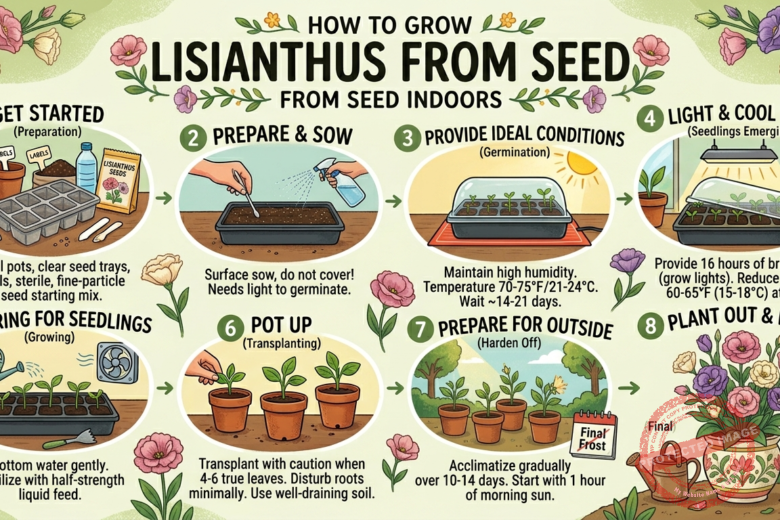
Step by Step: How to Grow Geraniums from Seed Indoors
Step 1: Prepare the Soil
Fill your containers with a light seed starting mix.
Avoid using garden soil. It is too heavy and can hold excess moisture.
Gently level the surface without pressing it down too tightly.
Step 2: Sow the Seeds
Geranium seeds are larger than some other flower seeds, which makes them easier to handle.
Place each seed on the soil surface.
Cover lightly with a thin layer of soil, about a quarter inch deep.
Step 3: Water Carefully
Mist the soil gently or water lightly.
Keep the soil moist but not soaked.
Too much water can cause seeds to rot.
Step 4: Provide Warmth
Cover the container with a clear lid or plastic wrap.
Place it in a warm spot.
Ideal temperature is around 70 to 75 degrees.
Geranium seeds can take 1 to 3 weeks to germinate, sometimes longer.
Step 5: Give Them Light
Once seedlings appear, remove the cover.
Place them in bright light.
A sunny window or grow light works well.
Without enough light, seedlings can become weak and stretched.
Caring for Geranium Seedlings
Young geranium plants need steady care.
Water when the top layer of soil feels slightly dry.
Do not let them sit in soggy soil.
Good airflow helps prevent disease.
If you notice slow growth, check light levels first.
Light is often the missing piece.
Transplanting Geranium Seedlings
When seedlings develop a few sets of leaves, they are ready to move.
Gently transfer each plant into its own pot.
Use a well-draining potting mix.
Be careful with the roots. They are still delicate.
After transplanting, water lightly and place back in bright light.
Light and Temperature Needs
Geraniums love bright light.
Place them near a sunny window where they can get several hours of light daily.
If natural light is limited, a grow light can help.
Keep temperatures moderate. Avoid placing them in cold drafts or extreme heat.
Watering Geraniums Indoors
Geraniums prefer slightly dry conditions compared to many indoor plants.
Water when the soil feels dry about an inch below the surface.
Avoid overwatering.
Too much moisture can lead to root problems and weak growth.
Feeding Your Geraniums
Once plants are established, you can feed them lightly.
Use a balanced liquid fertilizer every few weeks.
Do not overfeed. Too much fertilizer can reduce flowering.
Healthy soil and moderate feeding are enough.
Encouraging More Flowers
To get fuller plants with more blooms:
- Pinch back the growing tips occasionally
- Remove spent flowers
- Provide consistent light
These small steps make a big difference over time.
Common Mistakes Beginners Make
Starting Too Late
Geraniums take time. Starting early gives better results.
Overwatering
This is one of the most common issues.
Not Enough Light
Leads to weak, leggy plants.
Skipping Transplanting
Crowded seedlings struggle to grow properly.
A Small Growing Lesson
There was a season I nearly gave up on geranium seeds.
They took longer to sprout than I expected, and I started to think they had failed.
Then, slowly, one by one, they appeared.
That moment taught me something simple. Some plants just need more time, and rushing them only leads to frustration.
How Long Does It Take to Grow Geraniums from Seed?
Germination takes about 1 to 3 weeks.
From seed to flowering usually takes 12 to 16 weeks.
It is not the fastest plant, but the results are worth the wait.
FAQs About Growing Geraniums from Seed Indoors
Do geranium seeds need to be soaked before planting?
Not always, but soaking for a few hours can help speed up germination.
Can I grow geraniums indoors all year?
Yes, with enough light and proper care.
Why are my seedlings growing slowly?
They may need more light or warmer temperatures.
How often should I water?
Water when the soil feels slightly dry.
When will my geraniums bloom?
Usually within 3 to 4 months after planting.
Final Thoughts
Learning how to grow geraniums from seed indoors is a lesson in patience and consistency.
You will not see instant results, but you will see steady progress.
And when those first blooms finally open, it feels different from buying a plant.
You know exactly where it started.
Start with a few seeds. Give them warmth, light, and time.
And as you watch them grow, you may find yourself slowing down a bit too, paying attention in a way that feels surprisingly rewarding.
So are you ready to plant something today that your future self will thank you for?