 Adewebs
If you have ever seen lisianthus in full bloom, you probably paused without even realizing it. Soft petals layered like roses, colors that look almost painted on, stems that feel elegant without trying too hard. It is one of those flowers that makes you think, there is no way I can grow that myself.
And honestly, I used to think the same.
Because here is the truth most people do not say out loud. Growing lisianthus from seed indoors is not the easiest thing you will try. It is slow. It tests your patience. There will be moments when it feels like nothing is happening at all. But if you stay with it, if you understand what the plant needs and why it behaves the way it does, it becomes one of the most rewarding things you can grow.
This guide is not here to overwhelm you. It is here to walk you through how to grow lisianthus from seed indoors in a way that feels clear, practical, and honest. No shortcuts. Just what actually works.
What You Should Know Before You Start
Lisianthus seeds are extremely small. Almost dust-like.
And the plant itself grows slowly, especially in the early stages. It can take 5 to 6 months from seed to flower.
That means you are not planting for quick results. You are planting for something that takes time to build.
But here is the encouraging part. Once seedlings get past their early stage, they become much easier to manage.
So the real challenge is the beginning.
Why Grow Lisianthus from Seed Indoors?
You could buy plants, but growing from seed gives you more control and access to more varieties.
It also allows you to start early and grow stronger plants before the outdoor season begins.
And there is something deeply satisfying about watching such a delicate plant grow from almost nothing.
What You Need to Get Started
Keep it simple.
- Lisianthus seeds
- Seed trays or shallow containers
- Fine, well-draining seed starting mix
- Spray bottle
- Clear cover or humidity dome
- Bright window or grow light
A grow light is highly recommended because lisianthus needs strong, consistent light.
When to Start Lisianthus Seeds Indoors
Timing is very important.
Start seeds indoors about 12 to 16 weeks before your last frost date.
In many cases, even earlier is better.
Because lisianthus grows slowly, starting early gives it enough time to develop before transplanting.
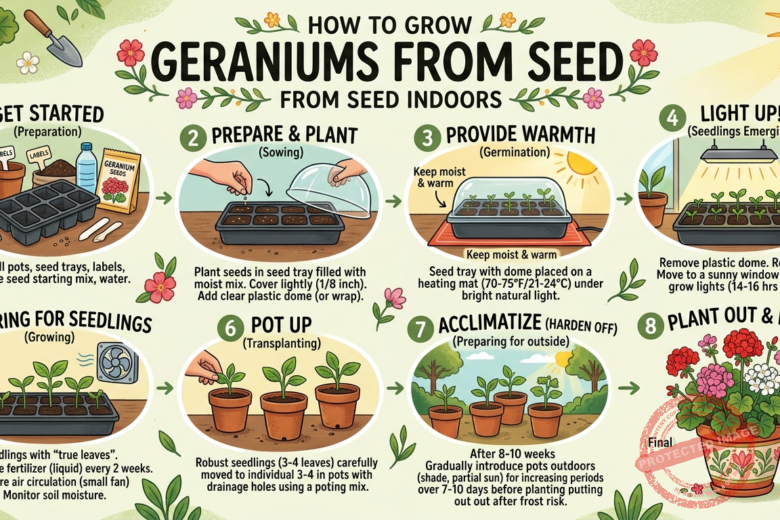
Step by Step: How to Grow Lisianthus from Seed Indoors
Step 1: Prepare the Soil
Fill your tray with a fine seed starting mix.
Smooth the surface gently.
Do not compact the soil too much.
Lisianthus seedlings need light, airy conditions.
Step 2: Sow the Seeds
This part requires a light touch.
Sprinkle seeds on the surface of the soil.
Do not cover them.
Lisianthus seeds need light to germinate.
Press them gently into the surface so they stay in place.
Step 3: Water Carefully
Mist the soil lightly.
Avoid pouring water directly.
Too much force can move the seeds.
Keep the surface evenly moist.
Step 4: Create a Humid Environment
Cover the tray with a clear lid or plastic wrap.
This helps maintain moisture and warmth.
Place the tray in a bright location.
Temperature should stay around 70 to 75 degrees.
Step 5: Be Patient During Germination
Lisianthus seeds can take 10 to 20 days to sprout.
Sometimes longer.
During this time, keep the soil moist and the environment stable.
Once seedlings appear, remove the cover.
The Slow Stage (What Most Beginners Misunderstand)
After germination, growth can seem extremely slow.
Seedlings may stay small for weeks.
This is normal.
Lisianthus spends a lot of time developing roots before visible growth takes off.
This is the stage where many people give up too early.
Stay consistent. Do not overwater. Do not rush.
Light Is Everything at This Stage
Place seedlings under bright light immediately.
A grow light works best.
Keep it close enough so seedlings do not stretch.
Weak light leads to leggy, fragile plants.
Strong light builds compact, healthy growth.
Watering Young Lisianthus
Keep soil slightly moist but never soggy.
Let the surface dry just a bit between watering.
Overwatering is one of the quickest ways to lose seedlings.
Good drainage is essential.
Transplanting Lisianthus Seedlings
Once seedlings have a few true leaves, you can transplant them.
Move each plant into its own small pot.
Use a well-draining potting mix.
Handle carefully. Roots are delicate.
After transplanting, water lightly and return to bright light.
Feeding Your Plants
Lisianthus benefits from light feeding.
Use a diluted liquid fertilizer once seedlings are established.
Do not overfeed.
Slow and steady growth is better than forcing it.
Common Mistakes to Avoid
Covering the Seeds
Lisianthus needs light to germinate.
Keep seeds on the surface.
Overwatering
Too much moisture can cause rot.
Not Enough Light
Leads to weak, stretched seedlings.
Giving Up Too Early
Growth is slow at first. That is normal.
A Real Growing Moment
There was a time I checked my lisianthus tray every day, expecting to see growth.
For weeks, almost nothing changed.
I thought I had done something wrong.
Then slowly, new leaves appeared. Stronger. Healthier.
That moment changed how I approached slow growing plants.
Not everything grows fast. Some things grow quietly before they grow visibly.
How Long Does It Take to Grow Lisianthus?
Germination takes about 2 to 3 weeks.
Early growth is slow and steady.
From seed to flowering can take 5 to 6 months.
It is a long process, but the results are worth it.
FAQs About Growing Lisianthus from Seed Indoors
Do lisianthus seeds need light to germinate?
Yes. Do not cover them with soil.
Why are my seedlings not growing?
They may be focusing on root development. Be patient.
Can I grow lisianthus indoors year round?
Yes, with enough light and proper care.
How often should I water?
Keep soil slightly moist, not soggy.
Is lisianthus hard to grow?
It is not difficult, but it requires patience and consistency.
Final Thoughts
Learning how to grow lisianthus from seed indoors is not about speed.
It is about patience, observation, and trust in the process.
You plant something small. You wait. You adjust. You learn.
And slowly, it begins to grow into something beautiful.
If you can stick with it through the slow stages, you will not just grow a flower.
You will grow confidence.
So if you are ready to try something that challenges you just a little, why not start a tray today and see where it takes you?