 Adewebs
There is a certain kind of joy that comes from growing flowers before the season even begins. While everything outside still feels quiet, you are already starting something inside. Petunias are one of those flowers that make that effort feel worth it. Bright, soft, sometimes trailing, sometimes full and bushy, they bring color in a way that feels effortless once they get going.
But starting petunias from seed indoors can feel intimidating at first. The seeds are tiny. The process seems delicate. And if you have ever tried before and nothing happened, it can make you hesitate to try again.
Here is the honest truth. Petunias are not difficult to grow, but they do require attention in the early stages. Once you understand what they need, the process becomes much simpler.
This guide will walk you through exactly how to grow petunias from seed indoors, step by step, in a way that feels practical and easy to follow.
What You Should Know Before You Start
Petunia seeds are extremely small.
They are almost like dust, which means they need careful handling. They also require light to germinate, which is something many beginners do not realize.
Petunias take a bit of time to grow. From seed to flowering, it can take about 10 to 12 weeks.
So patience and consistency are key.
Why Grow Petunias from Seed Indoors?
You could buy petunia plants, but starting from seed gives you more options and often saves money.
It also allows you to grow more plants at once and enjoy the full process from start to bloom.
And there is something special about seeing a tray of tiny seedlings turn into a full display of flowers.
What You Need to Get Started
Keep it simple.
- Petunia seeds
- Seed trays or small pots
- Light, well-draining seed starting mix
- Spray bottle
- Clear cover or plastic wrap
- Bright window or grow light
A grow light is very helpful because petunias need strong light early on.
When to Start Petunia Seeds Indoors
Start seeds about 8 to 10 weeks before your last frost date.
If you are growing them indoors only, you can start anytime, as long as you provide enough light.
Early planting gives you stronger plants by the time warm weather arrives.
Step by Step: How to Grow Petunias from Seed Indoors
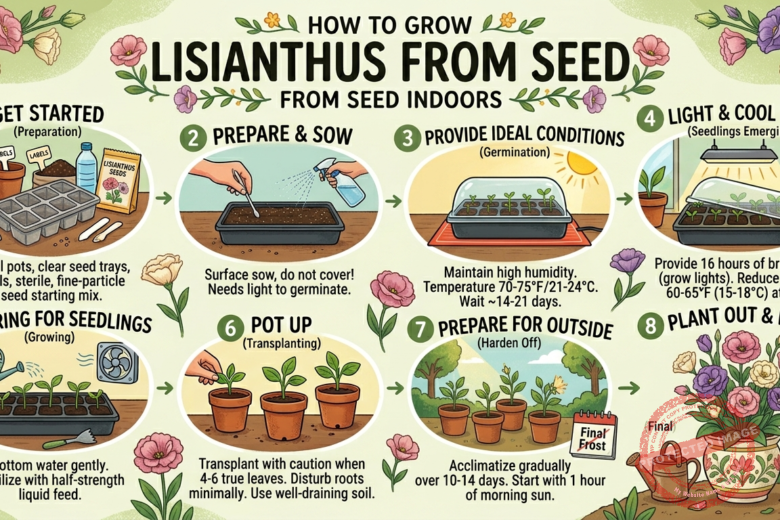
Step 1: Prepare the Soil
Fill your tray with a fine seed starting mix.
Level the surface gently.
Do not press the soil too tightly.
Step 2: Sow the Seeds
Sprinkle the seeds lightly on the surface.
Do not cover them with soil.
Petunia seeds need light to germinate.
Press them gently so they make contact with the soil.
Step 3: Water Carefully
Mist the surface using a spray bottle.
Avoid pouring water directly, as it can move the seeds.
Keep the soil evenly moist.
Step 4: Cover and Keep Warm
Cover the tray with a clear lid or plastic wrap.
This helps maintain humidity.
Place it in a bright, warm location.
Ideal temperature is around 70 to 75 degrees.
Step 5: Wait for Germination
Seeds usually sprout within 7 to 14 days.
Once seedlings appear, remove the cover.
Light becomes very important at this stage.
Caring for Petunia Seedlings
Young seedlings need consistent care.
Give them bright light every day.
If they start leaning or stretching, they need more light.
Water gently and keep the soil slightly moist.
Avoid overwatering.
Good airflow also helps prevent disease.
Transplanting Petunia Seedlings
Once seedlings develop a few sets of leaves, they are ready to move.
Carefully transplant them into individual pots.
Use a well-draining potting mix.
Handle gently to avoid damaging roots.
Light and Growth
Petunias love light.
Place them near a sunny window or under a grow light.
Strong light helps them grow compact and healthy.
Weak light leads to leggy plants.
Watering Petunias Indoors
Water when the top layer of soil feels dry.
Do not let the soil stay soggy.
Petunias prefer slightly moist but well-drained conditions.
Feeding Your Petunias
Once established, feed lightly with a balanced fertilizer.
Do this every couple of weeks.
Too much fertilizer can lead to lots of leaves but fewer flowers.
Pinching for Fuller Plants
Pinch back the tips once plants are a few inches tall.
This encourages bushier growth.
Without this step, plants may grow tall and thin.
Common Mistakes Beginners Make
Covering the Seeds
Petunia seeds need light to germinate.
Overwatering
Too much water can damage seedlings.
Not Enough Light
Leads to weak, stretched plants.
Skipping Transplanting
Crowded seedlings struggle to grow properly.
A Small Growing Lesson
There was a time I placed petunia seedlings near a window that looked bright enough.
Within days, they began stretching toward the light.
I moved them closer and added extra light.
The difference was clear within a week.
That moment showed me how much light matters in early growth.
How Long Does It Take to Grow Petunias?
Germination takes about 1 to 2 weeks.
From seed to flowering usually takes 10 to 12 weeks.
With proper care, petunias grow quickly after the early stage.
FAQs About Growing Petunias from Seed Indoors
Do petunia seeds need light to grow?
Yes. Do not cover them with soil.
Can I grow petunias indoors all year?
Yes, with enough light.
Why are my seedlings leggy?
They need more light.
How often should I water?
When the top layer of soil feels dry.
When will petunias bloom?
Usually within 2 to 3 months after planting.
Final Thoughts
Learning how to grow petunias from seed indoors is one of those small steps that builds real confidence.
You start with something tiny and uncertain.
Then slowly, you see growth, leaves, and eventually flowers.
It reminds you that with the right care, even small efforts can turn into something vibrant.
Start with a small tray. Pay attention. Adjust as you go.
And before long, your space will feel brighter, more alive, and more connected to something you grew yourself.
So why not plant a few seeds today and see what grows?